

They say variety is the spice of life, and that couldn’t be truer when it comes to the Scottish Highlands.
Nestled amidst the breathtaking landscapes, you’ll find a plethora of species that call this region home. From majestic Red Deer roaming the hills to the awe-inspiring Golden Eagle soaring through the skies, the Scottish Highlands are teeming with life.
But that’s not all – there are mysterious creatures like the elusive Pine Marten and even the chance to catch a glimpse of the mighty Humpback Whale.
So, if you’re curious about the fascinating wildlife that inhabits this enchanting place, prepare to be captivated by the diverse species that populate the Scottish Highlands.
Key Takeaways
- The Scottish Highlands are home to a diverse range of land mammals, including the iconic Red Deer, Pine Marten, Scottish Wildcat, Mountain Hare, and Wild Boar.
- Conservation efforts in the Scottish Highlands focus on preserving the habitats and populations of these species, as well as preventing illegal hunting and hybridization.
- The Scottish Highlands also boast a rich variety of bird species, such as the Golden Eagle, Puffin, Osprey, Capercaillie, and Red Squirrel.
- Marine life in the Scottish Highlands includes impressive creatures like the Humpback Whale, Bottlenose Dolphin, Basking Shark, Orca (Killer Whale), and Eurasian Beaver. Conservation efforts aim to protect their habitats and vulnerable populations.
Red Deer
Red deer, the majestic and iconic species of the Scottish Highlands, dominate the upland forests and moorland habitats with their impressive size and powerful presence. These magnificent creatures, also known as Cervus elaphus, are Scotland’s largest deer. Stags, in particular, can weigh between 100-340kg, showcasing their remarkable strength. It’s during the autumn rutting season, from September to October, that red deer exhibit their most fascinating behavior. This is the time when stags engage in fierce battles to establish dominance and win the right to mate with the hinds.
The red deer mating behavior is a spectacle to behold. Stags emit deep, resonant roars known as ‘bugling’ to attract mates and proclaim their territory. Their antlers, which can grow up to a meter in width and weigh up to 15kg, serve as impressive weapons during these displays of strength. The sight of a red stag bellowing in a remote glen captures the true essence of the Scottish Highlands.
In recent years, red deer populations have experienced fluctuations. Factors such as habitat loss and fragmentation, as well as increased hunting pressure, have impacted these populations. However, conservation efforts and strict management practices have helped stabilize red deer numbers in certain regions. By understanding and respecting the red deer’s habitat and mating behavior, we can ensure the continued presence of this majestic species in the Scottish Highlands.
Golden Eagle
The golden eagle, a magnificent bird with golden brown flecked plumage and an impressive two-meter wingspan, soars majestically over the serene lochs of the Scottish Highlands. Its graceful flight and powerful presence make it a symbol of freedom and natural beauty. The return of the golden eagle to the UK is a testament to the successful conservation efforts in the region.
Conservation efforts have played a crucial role in the reintroduction of golden eagles to the Scottish Highlands. Once rare in the UK, these majestic birds have made a remarkable comeback. Through habitat restoration, protection from illegal activities, and reintroduction programs, their population has steadily increased.
To convey the significance of the golden eagle’s return, let’s explore the impact of their presence in a table:
| Golden Eagle | |
|---|---|
| 1 | Impressive wingspan of 2 meters |
| 2 | Majestic flight over serene lochs |
| 3 | Symbol of freedom and natural beauty |
The golden eagle adds to the awe-inspiring nature of the Scottish Highlands. Its presence is a reminder of the diverse wildlife that thrives in this region and the importance of conservation efforts to protect and preserve these magnificent creatures. As you explore the Scottish Highlands, keep an eye out for the golden eagle and appreciate the beauty and significance it brings to this remarkable landscape.
Pine Marten

As we shift our focus to the subtopic of Pine Marten, we continue our exploration of the fascinating wildlife that inhabits the Scottish Highlands.
The Pine Marten, with its dark brown fur, round ears, and bushy tail, is a nocturnal creature that can be found in the wooded areas of the highlands. While they’re known for their covert tree-dwelling behavior, they can occasionally be spotted in gardens, attracted by bird tables. These elusive creatures feed on bilberries, resulting in unique blue droppings. Their preference for dense forests makes them one of the hardest highland animals to find.
Unfortunately, Pine Marten population decline has become a cause for concern in recent years. As a result, conservation efforts have been put in place to protect these remarkable creatures. The decline in their population can be attributed to factors such as habitat loss and fragmentation, as well as illegal hunting. These conservation efforts focus on creating and maintaining suitable habitats for the Pine Martens, as well as implementing measures to prevent illegal hunting.
Observing the Pine Marten in its natural habitat adds a sense of mystery and intrigue to the Scottish Highlands. Their presence can be felt on light summer evenings when they venture out to hunt. During the mating season, they make loud, cat-like calls, adding to the enchantment of the highlands.
Humpback Whale
Spotting Humpback Whales along the Scottish Highlands coastline provides a captivating glimpse into the diverse and thriving marine life of the region. These majestic creatures, reaching lengths of up to 16 meters and weighing around 36 tonnes, showcase the incredible biodiversity of the area.
However, it’s important to acknowledge the impact of commercial whaling on humpback whale populations. Historically, commercial whaling had devastating consequences for humpback whales. These gentle giants were hunted for their blubber, meat, and bones, leading to a significant decline in their numbers.
Fortunately, conservation efforts have been implemented to protect and restore humpback whale populations. The return of migrating pods to the Scottish Highlands is a promising indication of the progress made in these endeavors. Conservation efforts aim to address the challenges faced by humpback whales, such as habitat degradation, climate change, and entanglement in fishing gear. By studying their behavior, migration patterns, and breeding habits, scientists can better understand the needs of these magnificent creatures and develop effective conservation strategies.
Spotting humpback whales in the Scottish Highlands is a testament to the resilience of these animals and the success of conservation efforts. It serves as a reminder of the importance of protecting our oceans and the incredible biodiversity they harbor. By supporting humpback whale conservation initiatives, we can ensure that future generations will continue to have the opportunity to witness these awe-inspiring creatures in their natural habitat.
Scottish Wildcat

After witnessing the awe-inspiring presence of humpback whales along the Scottish Highlands coastline, your attention is drawn to another remarkable species that calls this region home – the Scottish Wildcat. These elusive creatures, with their striking appearance and fierce nature, are considered the undisputed mascot of the Scottish wilderness. However, the Scottish wildcat population is under threat, facing the risk of hybridization and diseases from breeding with domestic cats.
To ensure the survival of this iconic species, Scottish wildcat breeding programs have been established. These programs aim to preserve and protect the genetic integrity of the Scottish wildcat through carefully managed captive breeding. By selectively pairing individuals with the appropriate genetic traits, these programs play a crucial role in maintaining a healthy and robust population.
Local conservation efforts are also in place to safeguard the Scottish wildcat. These efforts involve habitat preservation, monitoring, and public awareness campaigns. It is important to preserve the UK’s last native wildcat population, as they are an integral part of the Scottish Highlands’ ecosystem and cultural heritage.
In order to evoke emotion and emphasize the significance of protecting these majestic creatures, let us take a moment to reflect on the importance of their conservation.
| Column 1 | Column 2 | Column 3 |
|---|---|---|
| Iconic | Majestic | Fierce |
| Elusive | Striking | Remarkable |
| Threatened | Endangered | Vulnerable |
| Wild | Genetic | Conservation |
| Habitat | Preservation | Awareness |
The Scottish wildcat embodies the essence of freedom and resilience, and it is our responsibility to ensure their survival for generations to come. By supporting Scottish wildcat breeding programs and conservation efforts, we can play a vital role in protecting these magnificent creatures and preserving the natural beauty of the Scottish Highlands.
Puffin
The puffin, a remarkable bird species found in the Scottish Highlands, showcases impressive flying and diving abilities, reaching speeds over 50 mph and descending to depths of up to 60 meters. With their distinctive appearance and colorful beaks, these playful creatures add a touch of whimsy and humor to the Scottish landscape.
Puffins are known for their nesting habits, often choosing to build their burrows on coastal cliffs. These burrows provide a safe haven for their young, protecting them from predators and harsh weather conditions. Puffins are a popular sight for birdwatchers and tourists visiting the Scottish coast, who marvel at their graceful flight and comical appearance.
However, despite their charm, puffin populations have been declining in recent years. In response, conservation efforts have been initiated to protect these beloved birds. Measures such as habitat restoration, predator control, and public education campaigns aim to ensure the survival of puffins and preserve their unique role in the Scottish Highlands.
Capercaillie

Capercaillie, the largest member of the grouse family in the Scottish Highlands, captivates observers with its impressive courtship displays and contributes to the diverse wildlife population of the region. Male capercaillies are renowned for their elaborate mating rituals, which are a sight to behold. These rituals take place at lekking sites, where males gather to compete for breeding rights.
During the mating season, male capercaillies engage in a series of extravagant displays to attract females. These displays include jumping, rustling their wings, and emitting odd cork popping sounds. The males puff themselves up, displaying their magnificent plumage, and strut around, vying for the attention of the females.
Capercaillie mating rituals aren’t only visually stunning but also serve as a barometer for the health of their population. Over the years, the capercaillie population in the Scottish Highlands has faced significant challenges. Factors such as habitat loss, changes in land management practices, and predation have led to a decline in their numbers.
Conservation efforts have been put in place to protect and restore capercaillie habitats, as well as to reduce disturbances during the sensitive breeding season. Monitoring the population trends of capercaillie is crucial to ensure their long-term survival and to maintain the biodiversity of the Scottish Highlands.
The presence of capercaillie in the Scottish Highlands adds to the region’s allure and showcases the intricate beauty of nature’s courtship rituals. Observing these majestic birds in their natural habitat is a privilege that reminds us of the freedom and wonder that wildlife brings to our world.
Dolphin
As you shift your focus from the captivating courtship displays of the capercaillie, your attention is drawn to the next intriguing species found in the Scottish Highlands: the intelligent and self-aware creature known as the bottlenose dolphin. These remarkable marine mammals are renowned for their inquisitive and playful nature, captivating the hearts of humans and representing the strong connection we’ve with the ocean.
Dolphins exhibit a high level of intelligence, often compared to that of primates. They possess complex social structures and are able to communicate with each other using a variety of vocalizations and body movements. Their cognitive abilities enable them to solve problems and demonstrate self-awareness, making them one of the most intelligent creatures in the animal kingdom.
Conservation efforts for dolphins are crucial, as they face various threats such as habitat loss, pollution, and entanglement in fishing gear. In Scotland, the Ardnamurchan Peninsula offers unique opportunities to observe dolphins in their natural habitat, particularly in Loch Sunart. By promoting responsible tourism and supporting conservation organizations, we can contribute to the protection of these fascinating creatures and their fragile marine ecosystems.
As you continue your exploration of the Scottish Highlands, keep an eye out for these enchanting dolphins, leaping and interacting with their environment. Their presence serves as a reminder of the beauty and richness of the natural world, and the importance of preserving it for future generations to experience and enjoy.
Basking Shark
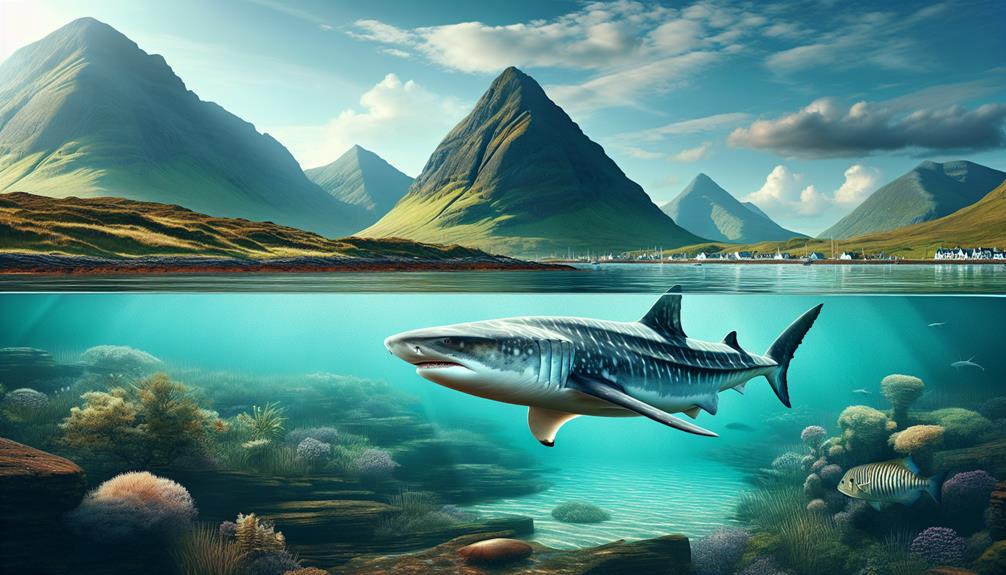
As you explore the species in the Scottish Highlands, it’s time to turn your attention to the magnificent Basking Shark. Known for its enormous size, reaching up to 12 meters in length, this species can often be found off the west coast and in the Inner Hebrides.
During the summer months, these gentle giants gather in large numbers to feast on microscopic plankton, making the Inner Hebrides a prime location to witness their impressive feeding habits.
Basking Shark Habitat
Basking Sharks, the second largest fish in the ocean, inhabit the waters off the west coast and in the Inner Hebrides of the Scottish Highlands.
These majestic creatures exhibit fascinating migration patterns as they travel to the Scottish coast during the summer months. Gathering in large quantities, sometimes known as a ‘shark parade,’ they come to feed on the abundant microscopic plankton found in these waters.
It’s during this time that the Scottish Highlands offer a remarkable opportunity to witness and interact with these gentle giants. Efforts are underway to conserve and protect the Basking Shark population, as they’re a vulnerable species.
Conservation organizations work tirelessly to monitor and study these magnificent creatures, ensuring their continued presence in their natural habitat. Witnessing the Basking Sharks in their habitat is an awe-inspiring experience that highlights the importance of conservation and the need to protect these incredible creatures.
Basking Shark Diet
During their summer migration to the Scottish coast, Basking Sharks demonstrate a remarkable dietary preference for microscopic plankton, highlighting their role as filter feeders in the marine ecosystem.
These gentle giants swim with their enormous mouths wide open, filtering vast quantities of water to extract their tiny prey. Basking Sharks have specially adapted gill rakers that prevent larger particles from entering their digestive system, ensuring that only plankton is consumed.
This unique feeding behavior allows them to efficiently exploit the abundant plankton blooms found in the waters off the west coast and in the Inner Hebrides.
The conservation status of Basking Sharks is of particular concern due to their vulnerability to overfishing. Understanding their migration patterns and diet is crucial for implementing effective conservation measures to protect these magnificent creatures.
Mountain Hare
The Mountain Hare, smaller and more social than the Brown Hare, roams the heather moorland of the Scottish Highlands, contributing to the rich and diverse wildlife ecosystem. These hares are well adapted to the harsh conditions of their habitat, with their unique characteristics enhancing the beauty and charm of the Scottish Highlands.
The Mountain Hare population in the Scottish Highlands is abundant, as their habitat suitability is well-suited for their survival. They prefer the heather moorland found above 300 meters, where they can find ample food and shelter. This habitat provides them with the necessary vegetation to graze on, including heather, grasses, and shrubs. The mountain hares’ ability to change the color of their coats with the seasons allows them to blend seamlessly with their surroundings, providing them with excellent camouflage and protection from predators.
Observing these hares in their natural habitat is a remarkable experience. In the spring, before their winter coat has molted, they can be spotted easily against the remaining snow patches. Their behavior is captivating as they engage in social interactions, such as chasing each other or standing on their hind legs to communicate. They can have litters of up to 12 offspring, and the female hares, known as hinds, take care of the young.
The presence of the Mountain Hare in the Scottish Highlands adds to the diversity and vibrancy of the wildlife ecosystem. Their ability to thrive in the challenging environment of the moorland showcases their resilience and adaptability. The sight of these hares gracefully hopping across the heather-covered landscape is truly a testament to the freedom and beauty of nature in the Scottish Highlands.
Osprey
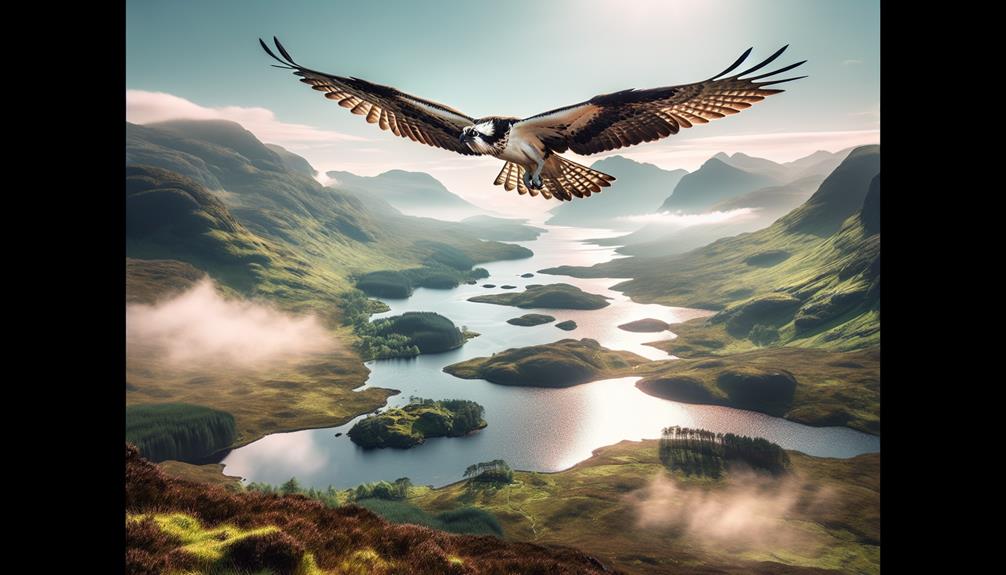
When observing Ospreys in their natural habitat, you’ll be fascinated by their nesting behavior. These birds select elevated locations close to lochs and rivers, constructing large nests made of sticks, moss, and other materials.
The male Osprey plays a crucial role in providing food for the family, skillfully hunting for fish and bringing back large catches to the nest. It’s truly remarkable to witness their precise hunting techniques and the dedication they demonstrate in nurturing their young.
Osprey Nesting Behavior
Osprey nesting behavior is characterized by their arrival in Scotland in early April, following a 3,000 mile flight, and their selection of nesting sites close to lochs and rivers. These magnificent birds have specific nesting habits that make them a unique species in the Scottish Highlands.
Once they arrive, the ospreys begin to build their nests, which are typically located on tall trees or man-made platforms near bodies of water. The male osprey takes on the role of the primary provider, fishing and bringing back large fish to the nest to feed the female and their young. This nesting behavior is a fascinating sight to behold, as the ospreys display their incredible fishing skills and nurturing instincts.
To witness this remarkable event, you can visit regulated hides at Loch of the Lowes in Perthshire or Rothiemurchus Estate in Speyside, where you can observe these magnificent creatures in their natural habitat. The ospreys’ nesting behavior is truly a testament to their adaptability and survival instincts.
Osprey Diet and Hunting
After witnessing the ospreys’ remarkable nesting behavior in the Scottish Highlands, it’s intriguing to delve into their diet and hunting habits.
Ospreys are skilled hunters that rely primarily on fish as their main source of food. Their hunting techniques are impressive and efficient. When hunting, ospreys hover above the water, scanning for fish near the surface. Once they spot their prey, they dive feet-first into the water, using their sharp talons to snatch the fish from beneath the surface.
Ospreys are well adapted for this type of hunting, with specialized adaptations such as reversible outer toes and spiky foot pads that help them grip slippery fish. After catching their prey, ospreys take flight and head back to their nest to feed. Their feeding habits consist of tearing the fish into smaller pieces, which they then consume.
Ospreys are truly remarkable creatures, perfectly adapted to their aquatic environment.
Osprey Conservation Efforts
Conservation efforts for the osprey have been instrumental in the remarkable recovery of this protected species in Scotland. Osprey conservation techniques have played a key role in the success of osprey reintroduction programs throughout the country.
These programs aim to create suitable nesting habitats and ensure the availability of prey for these magnificent birds. Nest platforms have been installed in strategic locations near lochs and rivers, providing safe and secure nesting sites. Additionally, fish populations have been monitored and managed to ensure an adequate food supply for the ospreys.
The implementation of regulated hides has allowed visitors to observe these birds without disturbing their natural behavior. These conservation efforts have resulted in a significant increase in the osprey population, with 300 pairs now present in Scotland.
It’s truly inspiring to witness the positive impact that dedicated conservation initiatives can have on the recovery of endangered species.
Beaver

The Eurasian beaver, a native species once extinct in Scotland 400 years ago, has successfully been reintroduced and can now be found in Argyll. These fascinating creatures are active year-round and can be spotted rarely in their natural habitat, contributing to the rich and diverse wildlife ecosystem of Scotland. With their tree-felling and dam-building activities, beavers play a crucial role in shaping and maintaining wetland habitats, providing homes for various species.
Beaver conservation efforts have focused on protecting and monitoring the beaver population, contributing to the preservation of native species and habitats in Scotland. The presence of beavers in the Scottish Highlands is a testament to successful wildlife restoration and highlights the importance of safeguarding and conserving Scotland’s natural heritage.
Beavers have a significant impact on wetland ecosystems. Their dam-building activities create complex networks of waterways, which not only provide a habitat for themselves but also support a variety of other aquatic species. These dams help to regulate water flow, reducing the risk of flooding and erosion in surrounding areas. Additionally, the ponds created by beavers act as natural filtration systems, improving water quality and promoting the growth of diverse aquatic vegetation.
Red Squirrel
As you enter the Scottish Highlands, one of the most captivating species you may encounter is the red squirrel. These charismatic creatures inhabit a variety of habitats, from dense forests to open woodlands, showcasing their adaptability and resilience.
However, the red squirrel population faces significant conservation challenges due to the competition and displacement caused by the invasive grey squirrels.
Understanding the threats they face and the ongoing conservation efforts is crucial to ensuring the preservation of these enchanting creatures in their last stronghold.
Red Squirrel Habitats
Red squirrels thrive in the vibrant woodlands and dense forests of the Scottish Highlands, where they seek refuge amidst the towering coniferous trees, particularly favoring pine, spruce, and Scots pine varieties. These habitats provide the necessary shelter, food, and protection for the red squirrels to thrive.
They’re known to build dreys, or nests, in the forks of trees, where they also store their food. The presence of red squirrels in these habitats indicates a healthy woodland ecosystem with diverse tree species.
However, the red squirrel population has been in decline due to factors such as habitat loss and competition with the gray squirrel. Conservation efforts are being made to protect and restore their habitats, ensuring the survival of these delightful creatures in the Scottish Highlands.
Conservation Efforts
Conservation efforts for the red squirrel population in the Scottish Highlands are focused on preserving their habitat and ensuring their survival against the dominance of grey squirrels. Red squirrels in the UK are threatened by the encroachment of grey squirrels, making Scotland their final stronghold.
Local conservation initiatives play a crucial role in safeguarding Scotland’s wildlife diversity and the survival of red squirrels. These efforts highlight the importance of preserving native species and contribute to the charm and beauty of the Scottish wildlife experience.
Preserving red squirrel habitats is essential for their continued existence and adds to the significance of wildlife protection and restoration in the Scottish Highlands. Spotting a red squirrel in Scotland is a magical experience that showcases the success of conservation efforts and the freedom of these beautiful creatures to thrive in their natural habitat.
Threats to Population
Threatening the red squirrel population in the Scottish Highlands, the encroachment of grey squirrels presents a fierce competition and disease transmission challenge. Grey squirrels outcompete red squirrels for food and territory, leading to reduced resources and increased stress for the red squirrel population. Additionally, grey squirrels carry the squirrelpox virus, which is deadly to red squirrels. Conservation strategies aimed at controlling grey squirrel populations and protecting red squirrel habitats are crucial for the survival of red squirrels in the Scottish Highlands. Disease management is also essential to prevent outbreaks and minimize the impact of squirrelpox virus on the red squirrel population. However, ongoing threats such as habitat loss, climate change, and urban development continue to pose challenges to the conservation efforts for red squirrels.
| Threats to Red Squirrel Population | Conservation Strategies |
|---|---|
| Competition with grey squirrels | Control grey squirrel populations |
| Disease transmission | Protect red squirrel habitats |
| Habitat loss and fragmentation | Manage disease outbreaks |
| Climate change impacts | Promote habitat restoration |
| Urban development | Implement conservation education programs |
Orca
Orcas, also known as Killer Whales, are magnificent marine creatures that can be spotted year-round in various locations across the Scottish Highlands, such as Skye, Shetland, Orkney, and Caithness, although sightings are rare. These apex predators roam the waters with grace and power, making them a fascinating sight for those lucky enough to encounter them.
In the waters of Shetland and Orkney, orcas feed on fish, porpoises, and seals, showcasing their impressive hunting skills. Their migratory pods follow the movements of mackerel and herring, while the west coast population remains resident throughout the year. You can identify orcas by their distinct dorsal fins, with males boasting taller fins than females. If you happen to spot an orca, it’s encouraged to report the sighting to the Hebridean Whale and Dolphin Trust, as this information helps in better understanding and conserving these incredible creatures.
The Scottish Highlands provide a prime location to observe these majestic animals, contributing to the diversity and richness of marine life in the area. In particular, the Inner Hebrides is one of the best places in the world to have an up-close experience with orcas. Organized trips are available for those seeking the freedom to swim, kayak, snorkel, or dive with these gentle giants.
Although orcas in captivity have been a topic of ethical debate, witnessing them in their natural habitat is an awe-inspiring experience that allows for a deeper appreciation of their beauty and importance in the ecosystem.
Wild Boar

Wild boar, scientifically known as Sus scrofa, are large, omnivorous mammals that inhabit the Scottish Highlands with their iconic tusked appearance and distinct foraging behavior. These majestic creatures exhibit fascinating behavioral patterns that allow them to thrive in their natural environment.
Wild boars are known for their social nature, often forming tight-knit family groups called sounders. These sounders consist of a dominant female, known as the sow, her young offspring, and other adult females. The adult males, also known as boars, typically live solitary lives and only join the sounder during the breeding season.
Wild boars are opportunistic feeders and have a diverse diet. They’re known to forage for roots, tubers, bulbs, acorns, and various plant matter. Additionally, they’re skilled hunters and will consume small mammals, reptiles, and even carrion when available. This adaptability in their feeding behavior allows them to sustain themselves in the challenging Highland environment.
However, the wild boar population in the Scottish Highlands has become a concern in recent years. The unrestricted growth of the population has led to increased habitat destruction and agricultural damage. To address this issue, measures have been taken to control the population, including regulated hunting and the implementation of exclusion zones in certain areas. These efforts aim to maintain a balance between the wild boar population and the fragile Highland ecosystem.
Conclusion
In conclusion, the Scottish Highlands are teeming with a diverse array of fascinating species. From the majestic Red Deer roaming the hills to the magnificent Golden Eagle soaring above, each creature contributes to the region’s rich biodiversity.
The elusive Scottish Wildcat and agile Pine Marten add an air of mystery to the landscape, while the presence of Humpback Whales and Orcas in the surrounding waters is truly awe-inspiring.
With such a remarkable variety of wildlife, one can’t help but ponder: What other hidden treasures lie within these captivating highlands?
